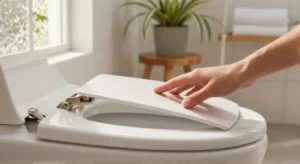
Does a sudden, heart-stopping bang echo through your home every time someone uses the bathroom? That sharp crack of a falling toilet seat is more than just a nuisance. It can chip the porcelain, crack the seat itself, and wake up the entire household during a midnight trip. Fortunately, you do not need to replace your entire toilet to fix this. Learning how to stop toilet seat from slamming is a quick, inexpensive DIY project that anyone can tackle.
Most modern toilet seats come designed with a mechanism to prevent slamming, but parts wear out, hinges loosen, or you might own an older model without this feature. This guide breaks down exactly how to diagnose the cause of the noise and implement a lasting fix. We will walk through simple adjustments, specialized replacement parts, and the best no-slam technology available today.
Mayfair Cassel Slow Close Round Toilet Seat
Check PriceWhy Does My Toilet Seat Slam Shut?
Before diving into the fix, it helps to understand the mechanics of the problem. Gravity is, of course, the primary culprit. Without resistance, the weight of the lid or seat accelerates until it makes hard contact with the porcelain bowl. However, the specific reason the resistance is missing usually falls into one of three categories.
Worn Out or Missing Soft-Close Dampers
Soft-close hinges contain a viscous fluid inside a cylinder. This fluid slows the seat’s descent by creating hydraulic resistance. Over time, the seals around these dampers can fail, causing the fluid to leak out. Once the fluid is gone, the hinge becomes a loose mechanical joint with zero stopping power, leaving you with a seat that falls like a guillotine.
Loose Mounting Bolts
Toilet seats are secured using long bolts that pass through the bowl and tighten underneath with nuts. With repeated use, the natural motion of sitting down and standing up works these nuts loose. When the bolts wobble, the entire seat shifts and drops unevenly, which can bypass the soft-close mechanism and create a slamming noise.
Standard Non-Dampened Hinges
Many budget-friendly or older toilets use simple plastic or metal hinges. These hinges offer zero hydraulic resistance. If your seat is lightweight, the problem is often trivial, but for heavier wooden or molded wood seats, the weight generates significant momentum. In this case, the only real solution is an upgrade or an aftermarket add-on.
Quick Fixes to Stop a Toilet Seat from Slamming
KOHLER Brevia Slow Close Elongated Toilet Seat
Check PriceBefore you spend money on new parts, start with the simplest, free solutions. Often, the problem is not a broken part but simply a misaligned one. These adjustments take less than five minutes and require no specialized tools beyond a screwdriver or your bare hands.
Tighten the Mounting Hardware
A loose seat will always make noise, even if it has soft-close hinges. The gap between the seat and the porcelain allows the seat to flex and build momentum before slamming down.
- Locate the bolt caps at the back of the seat where the hinges meet the bowl.
- Pop these caps open gently with a flathead screwdriver. Do not force them, as they can snap.
- Use a wrench or pliers to tighten the nut underneath the bowl. Hold the bolt head steady with a screwdriver on top.
- Do not overtighten. Porcelain is hard but brittle, and too much pressure can crack the bowl.
Apply Caulk or Rubber Pads for Cushioning
If the hardware is tight but the seat itself has warped slightly, the contact point might be uneven. You can purchase small adhesive rubber bumpers, often marketed for cabinet doors. Stick these bumpers to the underside of the seat. They absorb the impact, creating a soft landing even if the hinges lack a damper.
Upgrading to a Soft-Close Mechanism
Bemis 7300SLEC Slow Close Elongated Toilet Seat
Check PriceIf your toilet seat currently uses standard pin hinges, the most permanent and elegant solution on how to stop a toilet seat from slamming is a technological upgrade. You do not necessarily have to throw the entire seat away. The market offers universal conversion kits and complete replacement seats that solve the noise problem for good.
Install Soft-Close Hinge Conversion Kits
Some manufacturers produce retrofit dampers that replace your existing plastic hinge posts. These are small cylinders that press into the bowl’s mounting holes and connect to the seat. They contain the same viscous fluid found in premium seats.
To install these, you remove the old seat entirely. You then press the new dampeners into the porcelain holes and reattach the seat posts. The dampener acts as an intermediary, catching the seat as it falls. The effectiveness of these kits depends heavily on the weight of your seat, as a very heavy wooden seat can overwhelm a small universal damper.
Replace the Entire Seat
Sometimes, a seat is too old, stained, or worn to be worth repairing. If you are dealing with a scratched plastic seat or a splintering wood one, a full replacement makes more sense. Modern toilet seats come in two distinct shapes, round and elongated, so you must measure your bowl before purchasing.
Measure from the center of the mounting holes at the back of the bowl straight forward to the front edge of the rim. A round bowl measures about 16.5 inches, while an elongated bowl measures about 18.5 inches. Once you know your size, you can explore the wide range of soft-close options available. For a deep dive into picking the right fit, you can review our guide on the best elongated toilet seat options if standard styling is your preference.
Choosing a High-Quality No-Slam Seat
Not all soft-close seats are created equal. Pay close attention to the hinge material. Seats with stainless steel or solid brass hinges last significantly longer than those with plastic or pot-metal zinc hinges. The dampers in high-quality seats are sealed and tested for thousands of cycles.
Look for a slow close or quiet close label. These seats typically have a weighted lid and a specialized torsion hinge. Some premium models even feature a quick release function. This allows you to pop the entire seat off the hinges with the touch of a button for deep cleaning, which eliminates the buildup of debris that can interfere with the dampening mechanism. If you are looking for the market leaders in this category, check our curated list of the best no slam toilet seat picks here.
DIY Home Hacks for Immediate Silence
Mayfair Linden Slow Close Elongated Toilet Seat
Check PriceMaybe you need a solution tonight, and the hardware store is closed. Or perhaps you live in a rental apartment, and the landlord will not allow you to swap out the bathroom fixtures. There are several non-damaging, temporary remedies to stop the noise instantly using common household items.
The Foam Pipe Insulation Method
Plumbing pipe insulation is a squishy, dark grey foam tube with a slit down one side. You can cut a small section of this tube, about two inches long. Slip the foam over the rim of the toilet bowl, or wedge it between the seat and the bowl at the contact points. The high-density foam compresses silently, buffering the drop.
Adhesive Felt Pads
Visit your junk drawer or toolbox and find self-adhesive felt pads, the kind you use to keep furniture legs from scratching hardwood floors. Clean the underside of your toilet seat and the top surface of the bowl rim with rubbing alcohol to remove any oil or residue. Stick the soft felt pads directly onto the bowl where the seat bumpers normally rest. This creates a silent landing zone instantly.
Side-Mounted Safety Rails
For households with seniors or individuals with mobility challenges, slamming is often caused by dropping the seat from a height to avoid bending over fully. Installing a support rail system can provide a controlled descent path, reducing the likelihood of a panic drop that causes slamming.
Proper Maintenance to Prevent Future Slamming
Bath Royale Executive Series Elongated Toilet Seat
Check PriceEven the best soft-close hinges require minimal maintenance to stay silent over the long haul. The enemy of hydraulic dampers is lateral pressure. The dampers are designed to resist vertical rotation, not sideways force. If users lean heavily to one side while sitting, or if children use the seat as a step stool, the internal seals will blow out, and the fluid will leak.
Regular Cleaning of Hinge Mechanisms
Dust settling in the hinge area mixes with bathroom humidity to form a gritty paste. This paste acts like sandpaper on the moving parts of the damper. Once a month, use a spray bottle with warm water and a microfiber cloth to flush out the hinge area. Avoid harsh chemical sprays like bleach cleaners directly on the mechanism, as bleach can degrade the plastic seals and gaskets over time.
Retorquing Bolts Annually
The thermal expansion and contraction from hot showers and cold nights cause the plastic mounting bolts to stretch and contract. This is a natural process known as plastic creep. Once a year, you should check the tension on your mounting bolts. A quick turn of a screwdriver can prevent the minute wobble that eventually destroys the dampening hinge. Setting a recurring calendar reminder on your phone makes this easy to remember.
Comparing Different Anti-Slam Technologies
KOHLER Cachet ReadyLatch Elongated Toilet Seat
Check PriceConsumers today face a confusing market of terms like slow close, quiet close, and slam free. While they all aim for the same result, the internal technology differs slightly, affecting the longevity and feel of the closing action. Understanding these differences helps you make an informed purchase.
Hydraulic Damper vs. Torsion Spring
A true hydraulic damper uses silicone oil forced through a small valve. This creates a smooth, linear descent that takes about four to six seconds. A torsion spring system uses a coiled spring that provides light counter-torque. Spring systems are generally cheaper, but they do not offer the fluid, floating sensation of a hydraulic system. Springs can also wear out and become bouncy over time, whereas hydraulic dampers simply fail completely if a seal breaks.
Thermoplastic vs. Thermoset Seats
The material of the seat itself plays a role in noise. Thermoplastic seats are lightweight and hollow, which means they do not carry much kinetic energy and are inherently quieter when dropped, even without a damper. Thermoset or molded wood seats are dense and heavy. They hit hard and require a robust damper. If you prioritize silence over all else, a lightweight thermoplastic seat with a stainless steel hydraulic hinge is the gold standard according to the American Society of Mechanical Engineers (ASME) guidelines for plumbing fixture acoustics.
Troubleshooting a Stubborn Soft-Close Seat
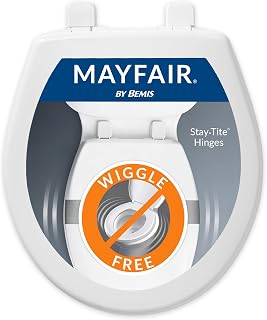
Mayfair Caswell Modern Slow Close Round Toilet Seat
Check PriceYou might already own a soft-close seat that has stopped working correctly. Before you condemn it to the trash, run through this diagnostic checklist. Many soft-close failures are mechanical misalignments that hide a simple fix.
- Symptom: Seat slams on one side only.
Fix: Check if the seat is sitting level. A bent hinge post or a cracked plastic washer underneath the bowl can tilt the seat, causing one damper to drive into the porcelain while the other floats uselessly. - Symptom: Seat closes slowly but clicks or creaks.
Fix: The attachment point between the seat and the hinge post is dry. A tiny dab of petroleum jelly on the plastic post (not inside the damper) lubricates the connection and stops the creaking plastic-on-plastic friction. - Symptom: Seat slams only when the lid is attached.
Fix: The combined weight of the lid and seat exceeds the damper’s rating. You may need to remove the lid or replace the seat with a model utilizing a heavy-duty damper.
FAQ: How to Stop Toilet Seat from Slamming
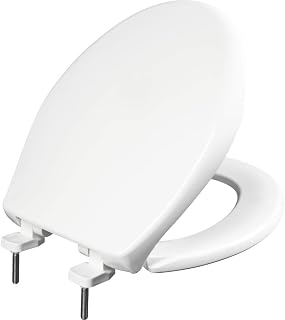
BEMIS Commercial Heavy Duty Round Toilet Seat
Check PriceCan you add soft close to an old toilet seat?
Yes, in most cases you can. If the old seat uses standard pin hinges, you can purchase universal soft-close adapters that press into the bowl. However, if the hinges are integrated or proprietary, you will need a full replacement seat. The adapter method works best on lightweight plastic seats rather than heavy wooden ones.
Why does my soft-close toilet seat still slam?
A previously soft seat that now slams likely has a failed damper. The silicone oil inside the hinge cylinder has likely leaked out. If you see a greasy residue around the hinge pin, that confirms a seal failure. You cannot refill these sealed units effectively, so the hinges or the seat must be replaced.
How long do soft-close toilet seats last?
The industry standard life cycle rating for a mid-range hydraulic damper is around 50,000 cycles. For a family of four, this equates to roughly five to seven years of normal use before the seals begin to degrade. Heavy usage or side-loading the seat by leaning on it drastically shortens this lifespan. For more context on seat durability and specific models, the experts at Consumer Reports frequently test these cycles, and you can check their findings on bathroom fixture durability via Consumer Reports toilet testing results.
Is it safe to use lubricant on toilet seat hinges?
Yes, but you must be specific. Do not spray WD-40 or penetrating oil into a soft-close damper because it will wash out the internal silicone grease and destroy the resistance. For standard metal hinges, a dry PTFE lubricant is excellent for eliminating squeaks. For the plastic posts where the seat sits, a tiny bit of synthetic brake grease or silicone paste prevents sticking without damaging plastics.
Mastering the Quiet Bathroom
Silencing a slamming toilet seat is one of those small quality-of-life upgrades that pays dividends every day. It transforms a jarring nightly interruption into a gentle, controlled motion that protects the integrity of your toilet bowl and maintains the peace of your home. The fix rarely requires plumbers or complex tools, just a bit of diagnostic work and the right component.
Start with the basics. Tighten those hidden mounting bolts tightly, but gently. If the hardware is intact and the noise persists, move on to installing sticky bumpers or a universal damper kit. For a permanent showroom-quality feel, however, upgrading to a modern seat with integrated hydraulic soft-close hinges remains the superior choice. By maintaining the alignment of the seat and keeping the pivot points clean, you ensure that the next time someone lets go of the lid, the only sound you hear is silence.