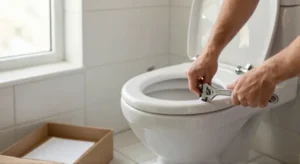
Learning how to change toilet seat is one of the simplest home repairs you can tackle. A fresh seat instantly upgrades bathroom comfort and hygiene, and the whole job usually takes less than fifteen minutes. Whether your old seat is cracked, stained, or just hard to clean, swapping it out does not require a plumber. You only need a few basic tools and a careful approach to avoid damaging the porcelain.
Many people assume that changing a toilet seat involves complicated hardware. In reality, most modern seats use a straightforward two-bolt system. Once you understand how the hinges attach, you can replace a round or elongated seat with confidence. This guide walks you through every step, from removing the old fixture to securing the new one without common pitfalls.

Mayfair Cassel Slow Close Round Wood Toilet Seat
Check PriceTools and Preparation for a Smooth Swap
Gathering the right supplies before you start keeps the process quick and frustration-free. Most toilet seats fasten with bolts and plastic wing nuts. Here is what you need on hand.
- A flathead screwdriver or a Phillips head, depending on the bolt tops
- Pliers or a small adjustable wrench
- Penetrating oil such as WD-40 for rusted hardware
- A rag or paper towel for cleanup
- Your new toilet seat, confirmed to fit the bowl shape
Wear gloves if the old seat feels grimy. It also helps to place a towel underneath the toilet bowl as you work so small parts do not fall onto the floor and roll away. Before touching anything, check the condition of the bolts. If they look crusty or rusted, apply penetrating oil immediately and let it sit for five minutes. That alone can save you from a stripped bolt and a bigger headache.
If your current seat only wobbles, you might not need a full replacement. A loose toilet seat often just needs bolt tightening. If the wobble comes from broken hinges or a cracked seat base, then a replacement is the right call. For a quick tightening guide, see our article on how to fix a loose toilet seat.
How to Remove an Old Toilet Seat
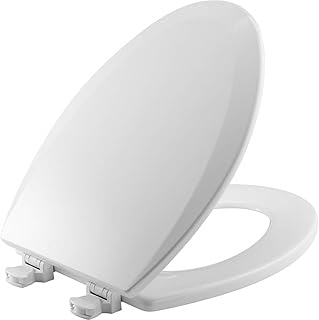
Bemis 1500EC 390 Lift-Off Wood Elongated Toilet Seat
Check PriceRemoval takes a few minutes once you locate the fasteners. Start by closing the old seat and lid. Pop open the hinge covers on either side of the seat base with your fingernail or a flathead screwdriver. These plastic caps snap off to reveal the bolt heads.
Loosen the Mounting Bolts
Most residential toilets use a bolt from the top and a plastic nut recessed underneath the bowl rim. You will need to reach behind and underneath the toilet to feel the nut. Use one hand to hold the screwdriver on the bolt head and the other to turn the wing nut counterclockwise. Some plastic nuts have built-in wings you can turn by hand. If they are stubborn, use pliers or a small wrench.
Do not force the bolt if it spins without loosening. That often happens when the nut is stuck and the entire bolt turns. In that case, apply penetrating oil around the bolt threads and wait a few minutes. While holding the bolt still with the screwdriver, grip the nut firmly with locking pliers and turn. With patience, even heavily rusted hardware breaks free.
Lift Away the Old Seat
Once both bolts are completely free of the nuts, lift the old seat straight up off the bowl. You might encounter a slight suction from years of contact. If it sticks, gently rock the seat from side to side before lifting. Set the old hardware aside. You usually cannot reuse the plastic nuts because they wear down, but keep the old bolts for reference when buying a new seat if needed.
Inspect the ceramic around the mounting holes for grime or rust streaks. Wipe the entire rim with a mild bathroom cleaner so the new seat sits against a smooth surface. This small step helps prevent future rocking and makes the installation look neat.
How to Install a New Toilet Seat
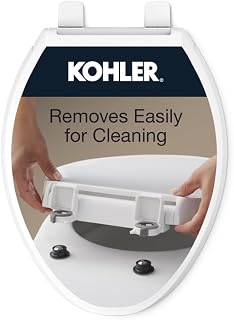
KOHLER 4636-RL-0 Cachet ReadyLatch Elongated Toilet Seat
Check PriceInstalling a replacement seat is the reverse process with one key focus: alignment. A seat that sits crooked will annoy everyone and may crack. Follow these steps for a straight, secure mount.
Check the Bowl Shape and Seat Fit
Toilets come in two standard bowl shapes: round and elongated. Measure the distance from the center of the mounting holes to the front lip of the bowl. Round bowls measure roughly 16.5 inches, while elongated bowls reach about 18.5 inches. Using an elongated seat on a round bowl leaves a protruding lip, and a round seat on an elongated bowl looks undersized and uncomfortable. If you are unsure which shape you have, see our recommendations for the best elongated toilet seat options for clear comparisons.
Position the Seat and Insert Bolts
Place the new seat on the bowl and align the bolt holes with the ceramic openings. Many seats include bolts already inserted in the hinges. If not, drop the bolts through the holes from the top. Make sure any rubber washer sits between the hinge and the ceramic to protect the porcelain and reduce movement.
Top-mount seats, common with quick-release designs, slide the bolts down from above. Bottom-mount seats sometimes require you to thread the bolt from underneath, but most modern residential seats follow the top-down pattern. Check the instructions included in the box for any unique assembly steps.
Tighten the Nuts Carefully
Thread the plastic wing nuts onto the bolts from below. Turn them by hand until they are snug against the ceramic. At this stage, the seat should still have a tiny bit of play so you can adjust the final alignment. Close the lid and seat to visually check that it is centered over the bowl. Once you are happy with the positioning, hold the bolt steady with a screwdriver and give each wing nut an additional quarter turn with pliers or a wrench.
The biggest mistake people make is overtightening the nuts. Porcelain is strong but brittle, and too much pressure can crack the bowl. The seat only needs to be tight enough that it does not shift when you sit. After tightening, test the seat by trying to wiggle it left and right. If it stays put, you have done it correctly.
Snap on the Hinge Covers
Finally, press the decorative hinge covers over the bolt heads until they click into place. These plastic covers conceal the hardware and also keep moisture away from the metal. If your new seat features a quick-release button, test it now. You should be able to press the release and lift the entire seat off for deep cleaning, then snap it right back on.
For a visual walkthrough that matches these written steps, check out Family Handyman’s detailed toilet seat installation guide. It offers close-up photos of both round and elongated installations.
Choosing the Right Toilet Seat for Your Bathroom
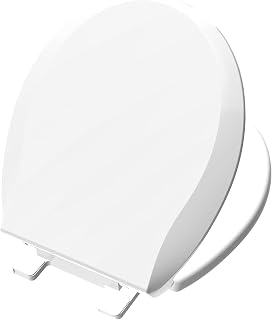
Aünsffer Round Toilet Seat Soft Close
Check PriceYou will find dozens of seat styles on the market, and the right one depends on your comfort and cleaning preferences. Understanding the differences helps you avoid ordering the wrong size or feature set.
- Round vs. elongated: Always match the bowl shape. Elongated seats offer more room, while round seats fit smaller bathrooms.
- Material: Plastic seats are lightweight, easy to sanitize, and do not chip. Wood core seats with a painted enamel finish feel warmer and more substantial, but they can chip over time if paint wears off.
- Soft-close lids: These have dampers that prevent the lid from slamming, a great choice for noise-sensitive households. If you already have a slamming seat, you can learn how to stop toilet seat from slamming with simple dampers.
- Quick-release mechanism: A hinge that lets you pop the seat off for thorough cleaning around the bolt areas. This feature also speeds up installation and future changes.
- Antimicrobial protection: Some plastic seats are infused with materials that resist bacteria growth, which can be helpful in high-traffic bathrooms.
Weight capacity is another consideration. Most standard seats hold up to 300 pounds, but heavy-duty options are available for added peace of mind. Check the manufacturer label if you need a particular rating.
Common Mistakes to Avoid When Changing a Seat
Mayfair Cassel Slow Close Round Wood Toilet Seat
Check PriceEven a five-minute project can go sideways if you skip a few basic checks. Here are the errors DIYers make most often and how to prevent them.
- Skipping the shape measurement: Guesswork leads to returns. Use a tape measure.
- Not cleaning the rim: Old grime prevents the new rubber washers from sitting flush, which causes rocking.
- Using metal nuts on porcelain: Metal can crack the ceramic over time. Always use the plastic nuts supplied.
- Overtightening: A snug fit wins. Crank too hard once and the bowl can fracture instantly.
- Ignoring rusted bolts: Stripping a seized bolt often means drilling it out. Penetrating oil and patience are your best friends.
- Forcing a misaligned seat: If the seat hangs over the edge, you grabbed the wrong shape or the bolts are in the wrong slot. Many seats have slotted holes to adjust position. Loosen the nuts, shift the seat, and retighten.
Care and Maintenance for a Freshly Installed Seat
Bemis 7300SLEC Slow Close Elongated Toilet Seat
Check PriceOnce the new seat is in place, a few habits keep it looking new and functioning well for years. Harsh chemical cleaners can degrade plastic hinges and fade enamel finishes. Use a mild soap or a dedicated bathroom cleaner and a soft cloth instead of abrasive pads.
Every six months, open the hinge caps and check that the nuts remain snug. Normal use, especially on floors that are not perfectly level, can slowly work bolts loose. A quick twist with your fingers prevents that wobbly feeling before it starts. If you have a soft-close seat, avoid pushing the lid down manually. Let the damper mechanism do its job, or you risk stripping the internal gears.
Quick-release seats make routine cleaning far simpler. Pop the seat off once a week to wipe the hidden crevices where dust and toilet water splashes collect. This small step keeps your bathroom smelling fresh and eliminates one of the most overlooked cleaning zones.
Frequently Asked Questions About Changing a Toilet Seat
Do I need any special tools?
No. A standard screwdriver and a pair of pliers will handle almost every toilet seat. Some seats include a plastic wrench specifically for the nuts, but an adjustable wrench works equally well. If the bolts are covered with stubborn rust, a shot of penetrating oil is the only extra product worth having nearby.
What if the bolts are rusted completely solid?
Soak the bolts with penetrating oil and wait ten minutes. Use locking pliers on the nut and a screwdriver on the bolt head for maximum torque. If the bolt still will not budge, cut through the plastic nut with a small hacksaw blade, being careful not to scratch the porcelain. In extreme cases, you may need to drill out the bolt, but that is rare with patient effort.
Can I put a soft-close seat on any toilet?
Yes, as long as you match the bowl shape and the bolt spacing. Most standard toilets have 5.5 inches between the mounting holes. Some specialty one-piece toilets have tighter spacing, so measure that distance before buying. Soft-close seats come in both round and elongated shapes and install exactly like a regular seat.
How do I know if my toilet is round or elongated?
Measure from the center of the bolt holes to the very front edge of the bowl. Round bowls are typically 16.5 inches long, while elongated bowls are about 18.5 inches. Some brands list the measurement on a sticker inside the tank, but a quick tape measure gives you a certain answer in seconds.
My new seat still moves after I tightened it. What went wrong?
Rocking usually means the rubber washers are not fully compressed or the nuts are slightly loose. Try holding the bolt still with a screwdriver while you give the nut a half turn more. If the seat still shifts, the floor might be uneven, making the toilet rock. That movement transfers to the seat. Tighten the toilet base bolts, and the seat will likely stay still. If not, add a thin plastic shim under the seat hinge after loosening the bolt, then tighten again.
Conclusion
Changing a toilet seat is a fast, low-cost project that makes a big difference in your bathroom’s comfort and cleanliness. With a screwdriver, a wrench, and fifteen minutes, you can remove the old seat and install a new one that matches your style and needs. Remember to measure your bowl shape, avoid overtightening, and clean the rim before you start. A little attention to alignment prevents a crooked seat that annoys everyone.
If your seat simply feels wobbly rather than damaged, start by trying to fix a loose toilet seat before spending money on a replacement. Once you have mastered this basic skill, you can confidently upgrade any bathroom in your home. Take a look at the seat options available, and pick one that fits your bowl shape perfectly to enjoy a quieter, sturdier, and more hygienic toilet experience.